
Real Touch Lab Velvet Shield™ Review: Lint-Free Silicone? We Tested It

- 0 Collect
- 5 Like
- 1000 Read
- Report


Keyword
As a reviewer, I am always on the lookout for real innovation in this industry. New shapes are fun. New colors are cute. But when someone claims they have fundamentally changed how silicone behaves, that gets my attention fast.
Every reviewer wants to be on the front line when something genuinely new shows up. And in this case, that meant getting hands-on with a material experiment straight out of the lab.
Real Touch Lab reached out to me with a specific request: honest, unscripted impressions of their new Velvet Shield™ coating. No marketing script. No talking points. Just real testing and real reactions.
Which, frankly, is funny, because if you are familiar with my work, you know I am not an “off the cuff” person. I like structure. I like repeatable tests. I like knowing exactly what I’m poking and why I’m poking it. However, for a shot to be one of the first on scene for this revolutionary breakthrough, I was at least willing to try and break my emotionally reserved bubble.
A Little About The Company
Real Touch Lab (also known as Real Touch Artisan) is a small independent studio run by a three-person team focused on hyper-realistic silicone design and material development. Rather than operating as a large corporate brand, the studio emphasizes small-batch production, hands-on craftsmanship, and direct involvement in every stage of development.
Before launching their own line, the team worked behind the scenes in design and 3D modeling roles for major adult product companies. Their decision to form Real Touch came from a desire to create products without cutting corners, with full creative control over materials, structure, and finishing.
A core focus of the studio is biological accuracy rather than traditional toy rating systems. Their surface material is calibrated at Shore 00-30 to simulate the softness of human inner-thigh tissue. Instead of relying solely on hardness ratings for internal structure, they prioritize tensile strength and bend resistance, engineering their cores to balance firmness with natural flexibility.
One of their key technical developments is the proprietary Velvet-Shield™ coating, designed to reduce surface drag, repel water, and minimize static-related dust and lint attraction. This coating is central to their ongoing research into improving long-term silicone usability.
In addition to material engineering, Real Touch places heavy emphasis on visual realism. Their models undergo a six-layer hand-painting process that recreates skin variations, capillaries, and subtle imperfections for a more lifelike appearance.
By combining digital design, artisan finishing, and experimental material science, Real Touch positions itself as a small studio focused on craftsmanship, realism, and iterative improvement rather than mass production.
testing setup

To keep things fair, Real Touch Lab provided two versions of the same flagship model:
One in standard medical-grade platinum silicone
One with the Velvet Shield™ coating
Same sculpt.
Same density.
Same production batch.
The only variable here is the surface treatment, which means any differences we see can be directly attributed to the coating.For reference, I also included a cheap Amazon silicone toy as a control in all my tests.
Alongside general handling, I focused on three specific areas:
Surface friction
Dust and lint resistance
Hydrophobic behavior
Surface Friction
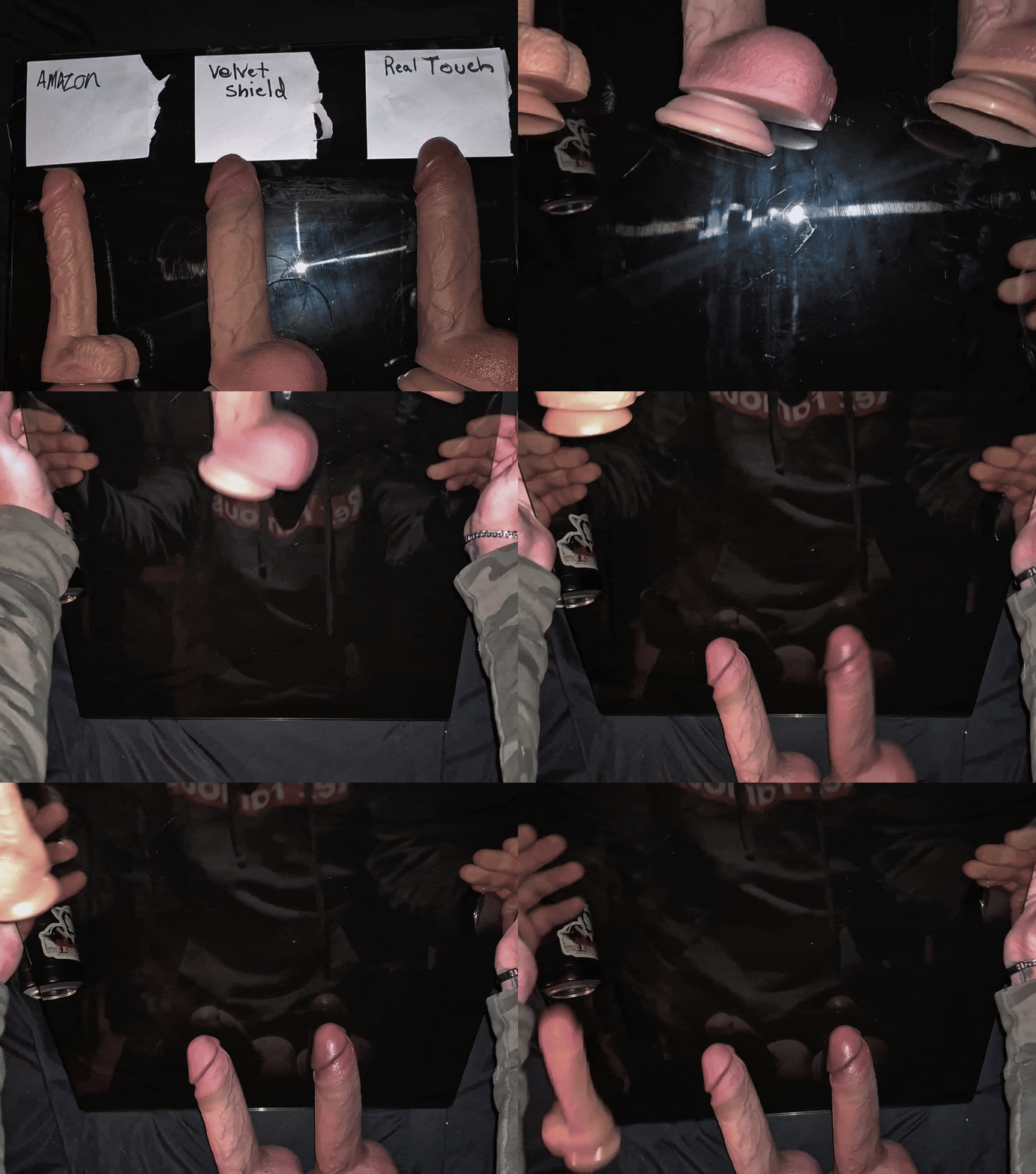
This test is not about softness. Both Real Touch Lab models share the same Shore rating. This is about glide, drag, and how the surface behaves under motion.
For testing, I used a glass slide ramp with three contestants:
Real Touch Lab Velvet Shield Coated model
Uncoated Real Touch Lab model
And a Cheap Amazon Toy as a control
I ran this test four times. The results?
The Velvet Shield model launched immediately every time. No hesitation. No stutter. Just smooth, confident glide.
The uncoated model followed closely behind. Still very good, with only slightly more resistance at the start.
The Amazon control was inconsistent. Sometimes it slid. Sometimes it stalled. Sometimes it looked confused about its life choices.
Across all four runs, Velvet Shield consistently took first place. This tells me the coating meaningfully reduces surface drag without turning the material into something slick or artificial.
Dust Resistance

Now for the test every silicone owner dreads. Lint. Hair. Dust. The tiny gremlins that cling to silicone like it owes them money.
I started with a cotton sweater straight out of my laundry hamper, already pre-seasoned with dog hair and cat fur. This felt like a realistic baseline, because if a toy can survive my laundry, it can survive just about anything.
The Amazon control immediately picked up a loose hair the moment it made contact. The uncoated Real Touch Lab model did a little better, collecting only a couple of small lint particles. The Velvet Shield model, on the other hand, came away completely clean. Nothing stuck.

Next came dryer lint. I broke it up and distributed it evenly across the head of each toy, doing my best to keep the dust bunnies from escaping and reproducing in my studio.
After one strong blow, the differences were obvious. The Amazon control held onto large clumps like it was emotionally attached to them. The uncoated model mostly cleared, with only one loose hair hanging on. The Velvet Shield model had a single strand stick briefly, then released on the second blow.
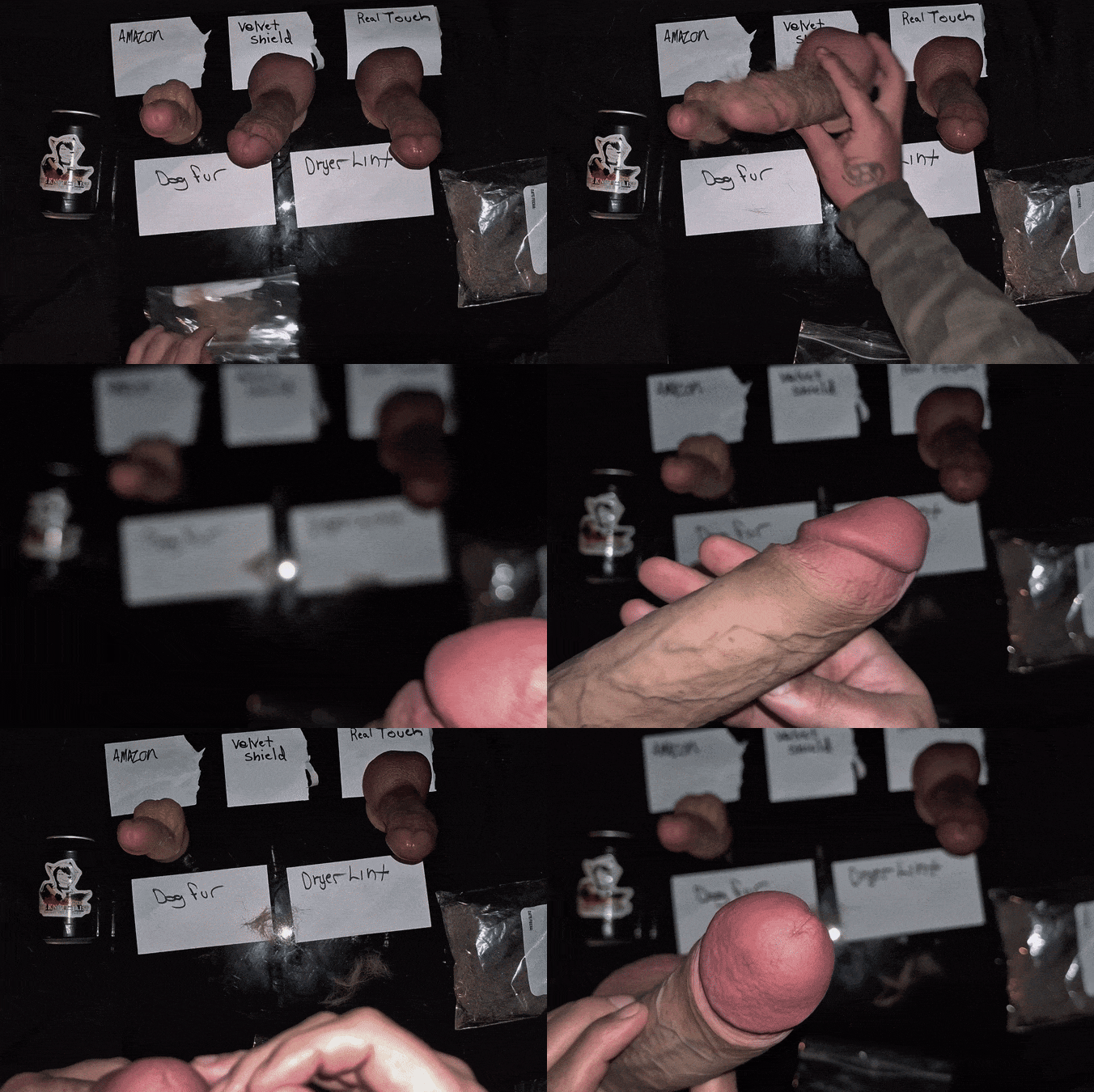
Finally, I moved on to pet fur. Using freshly brushed fur from my dogs, I spread an even layer over each toy and repeated the same process. Once again, the Amazon control clung aggressively and refused to let go without a fight. The uncoated model released most of the fur easily. The Velvet Shield model shed everything almost immediately, except for one strand that turned out to be caught in a crease. That last detail matters. It was not static cling doing the work. It was simply geometry.
Across all three tests, the pattern stayed consistent. The Velvet Shield surface resisted lint, dust, and fur far better than untreated silicone, without sacrificing texture or realism in the process. For anyone who actually uses and stores silicone toys long-term, this is not a small quality-of-life upgrade. It is the difference between constantly fighting debris and barely thinking about it at all.
Water Retention and Drying

Silicone is notorious for holding onto water, so I wanted to see how each of these behaved after a full dunk and shake. Each toy was submerged, sloshed, pulled out, and shaken using the same method.
The Amazon control went first. After shaking, water droplets clung heavily across the surface and collected in small pools along the curves.
Next was the uncoated Real Touch Lab model. The results were nearly identical. Water remained evenly distributed across the surface and required manual drying to fully clear.
Finally, the Velvet Shield model. Right away, there was noticeably less water clinging to the surface. Droplets released more easily, and the remaining moisture gathered into fewer, larger beads instead of spreading out.
It did not magically dry itself, and it still needed a quick wipe to finish the job. But compared side by side, it released water faster and required less effort to dry completely.
Final Thoughts
What stands out most about Velvet Shield is consistency, not in a vague, marketing-driven sense, but in a measurable, repeatable, tactile way. Across surface friction, dust resistance, and water behavior, this coating fundamentally changes how silicone behaves without changing what silicone feels like. This does not feel plasticky, nor does it feel artificial. It still feels like silicone, just refined. The surface remains textured and responsive, but without the usual downsides of static cling and stubborn drag. It is closer to skin-adjacent than any silicone I have handled so far.
What impressed me most is that none of these improvements come with trade-offs. The realism is still there. The tactile feedback is still there. The material still behaves the way silicone should when handled and used. It simply behaves better while doing it. Lint, dust, and pet hair no longer creep toward it. Water releases more easily. Glide resistance is reduced in a controlled, natural way rather than an oily or slippery one.
From a reviewer standpoint, this represents a legitimate material advancement. This is not branding doing heavy lifting or marketing language trying to manufacture excitement. The difference shows up immediately in side-by-side testing, and it shows up every single time.
As someone who has tested enough silicone to recognize when I am being sold a story, I appreciate being able to say with full confidence that Velvet Shield is not one of those cases. This is one of those rare upgrades you feel before you ever finish analyzing it. And honestly, that is the kind of innovation that speaks for itself.
https://www.lecheryreview.com/beta-testing-1/velvet-shield
Follow Us https://lecheryreview.straw.page/