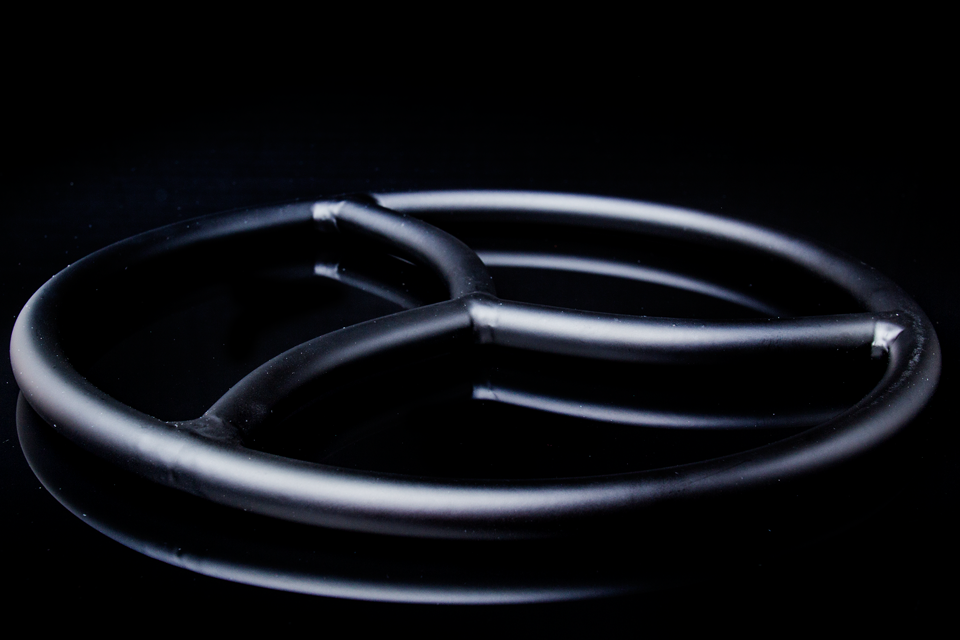
Master Series 9" Suspension Ring – A Dual-Perspective Review

- 1 Collect
- 4 Like
- 3351 Read
- Report


Overall Rating
Overall rating is based on Design, Sensory Quality, Ease of Use, and Ease of Cleaning. Price and Noise are shown for reference only.

This toy is provided and sponsored by ToyChats
Best sex toy review platform
🧠 Reviewed by a ToyChats Community Creator
Love testing toys? 💕 You can become a reviewer too
Are you a brand? Get your toys reviewed for free →
My verdict
Pros
- Incredibly strong and reliable
- Creates immediate psychological intensity
- Versatile for multiple positions
- Excellent for controlled posture play
- Amplifies dom/sub dynamics
- Enhances ceremonial and ritualistic scenes
- Smooth, comfortable finish
- Easy to attach multiple tools
- Turns an empty room into a dungeon atmosphere instantly
Cons
- Requires knowledge and training to use safely
- Not beginner-friendly for overhead restraint
- Needs rated hardware and proper installation
- Heavy emotional intensity—may overwhelm inexperienced partners
- Not discreet for storage if wall-mounted
There are tools you buy because you think they’ll be useful someday.
And there are tools you buy because the moment you see them, you know they will change the way you play.
The 9" Suspension Ring landed solidly in the second category for us.
What looks like a simple circular anchor becomes something far more profound when you understand how power dynamics work—how posture, tension, and restraint reshape someone mentally long before you ever touch them. The ring doesn’t just hold weight. It holds intention. It becomes the focal point of the room, the quiet command in the air, the unquestioned center of gravity for both people entering a scene.
I. FIRST IMPRESSIONS
When I unboxed the 9" Suspension Ring, the first thing that hit me was that it didn’t feel cheap. Some toys look the part but fold under pressure. This one had weight—not overwhelming, but intentional. A cool, even heaviness in the hand that told me it would take whatever I threw at it.
The matte-finish steel didn’t shine like a display piece; it looked like equipment. Like something meant for long scenes, for tension, for posture control. It gave off that exact energy—the kind that makes a submissive straighten their spine before you’ve spoken a word.
A circle is a simple shape, almost too simple, but in BDSM it becomes a symbol.
No beginning.
No end.
Just expectation.
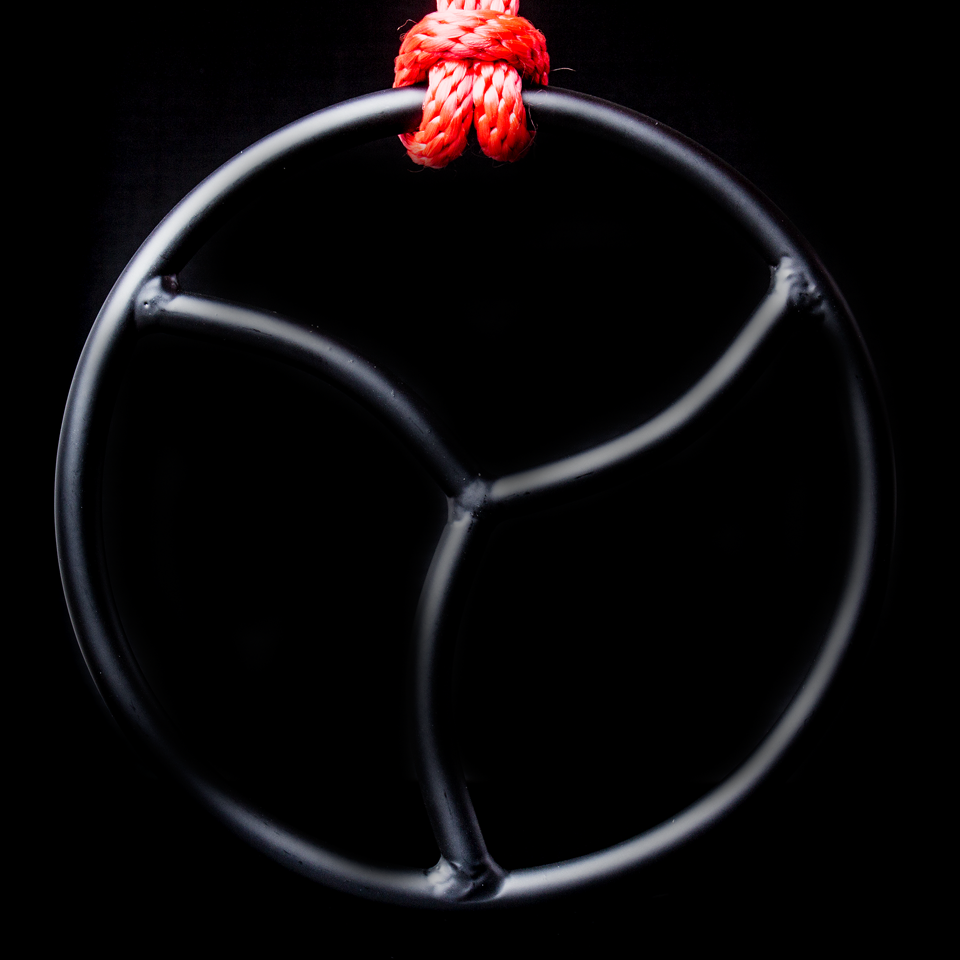
The moment I installed it on our suspension point (rated rigging, professionally mounted), the room changed. You wouldn’t think a silent, immobile ring could command attention. But trust me—when someone walks into a room and sees a single anchor point centered overhead, their breath always falters. Even if they hide it. Especially if they hide it. Her eyes went straight to it the first time she saw it mounted.
Not to me.
To the ring.
That’s when I knew exactly how much this tool would shape our scenes moving forward.
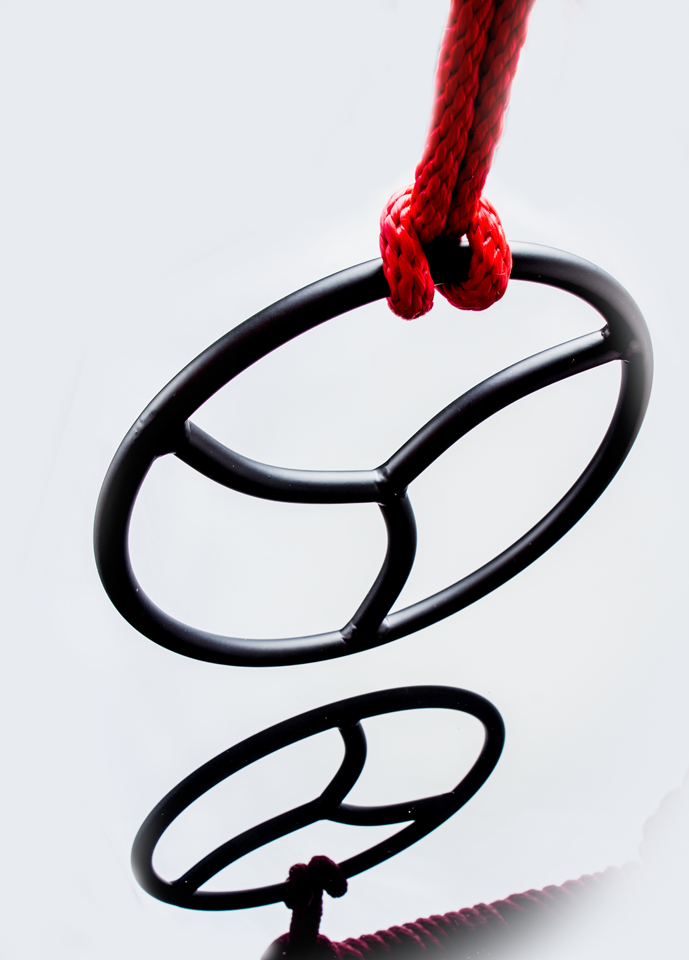
II. FIRST IMPRESSIONS – THE SUB’S VIEW
Her voice, summarized from her own commentary.
She told me later that the ring made her nervous—but in the good way.
The way that tells her body, “Pay attention.”
She described it like this:
“It felt like entering a room where the rules had already changed, even though nothing had happened yet. I knew exactly where you wanted me the moment I looked at the ring. I knew something was going to happen above my head, and that alone started getting me into the mindset before you even spoke.”
That’s the power of a fixed point in the air.
It creates vulnerability before restraint is even applied.
She liked the weight of the metal when she touched it. Said it felt “cold… but steady. Like it wasn’t going anywhere.”
And that, she told me, is exactly what made her relax into submission:
Knowing the equipment would not fail.
III. MATERIALS, BUILD, & SAFETY VERDICT
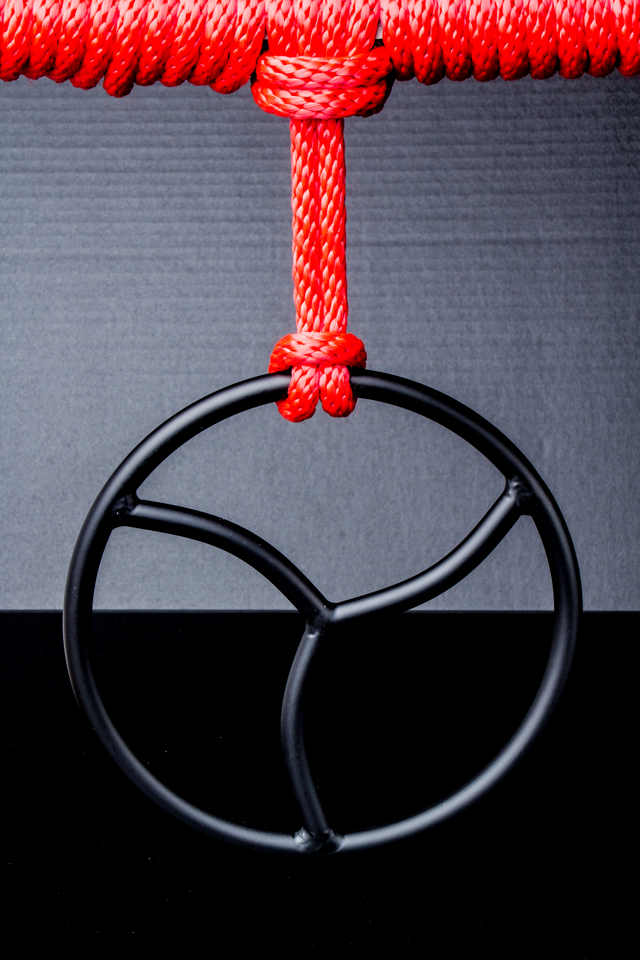
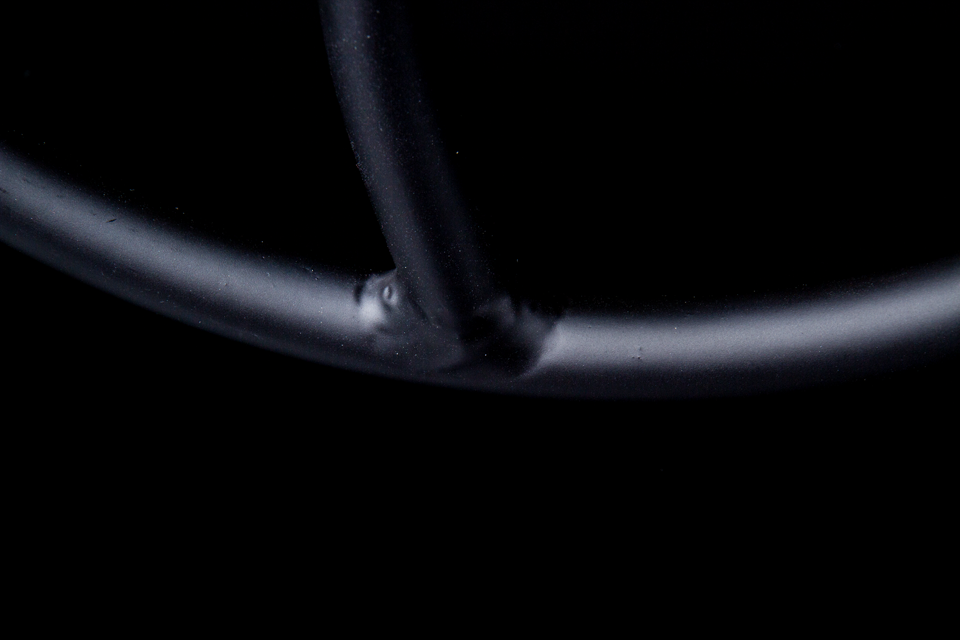
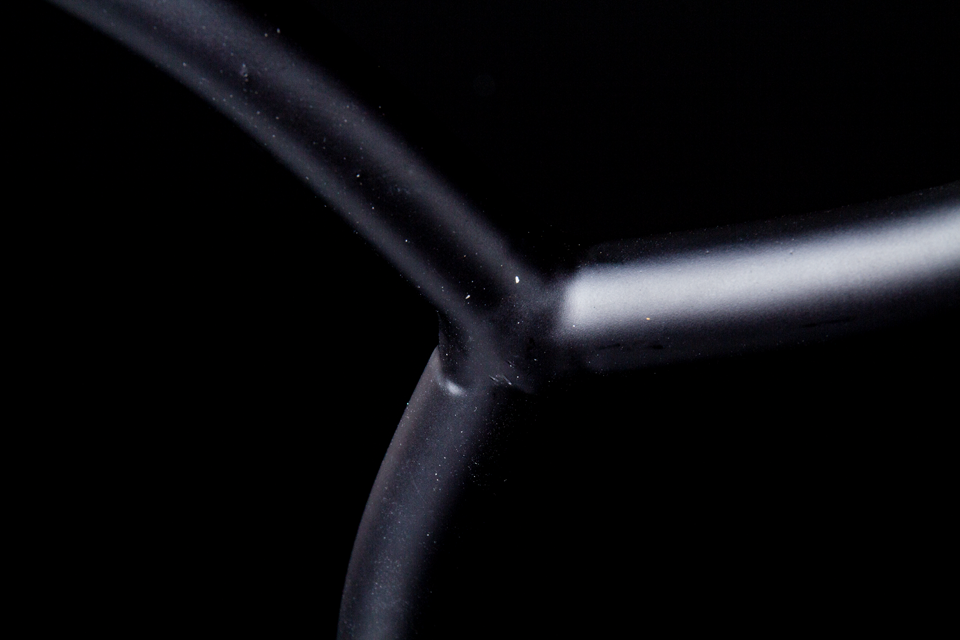
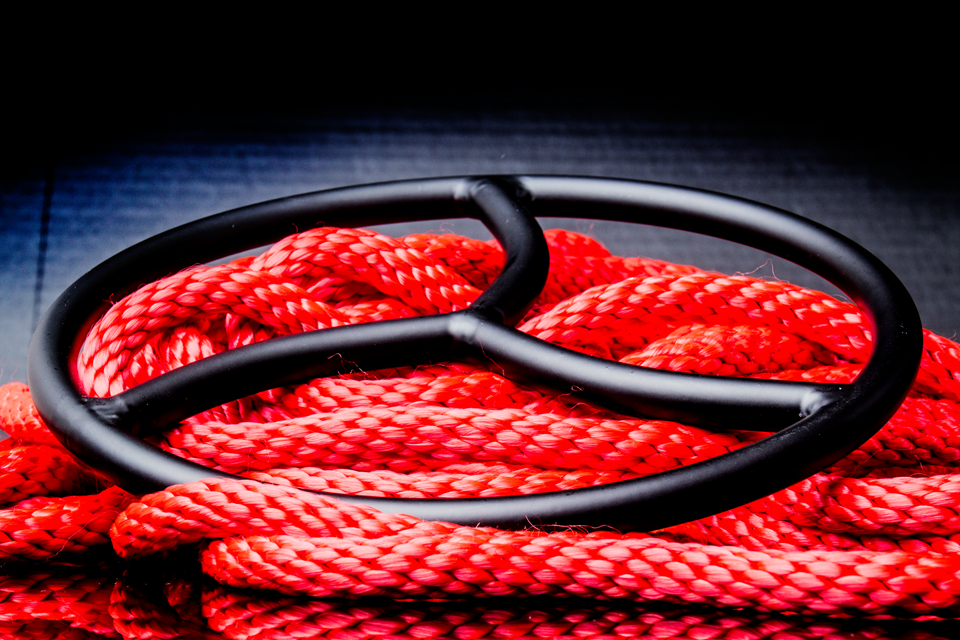
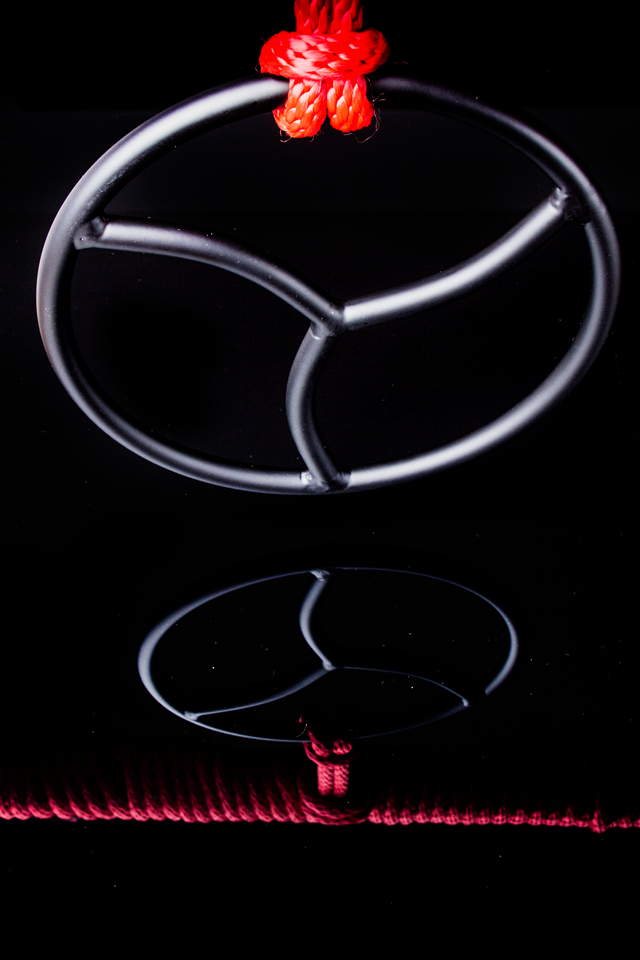
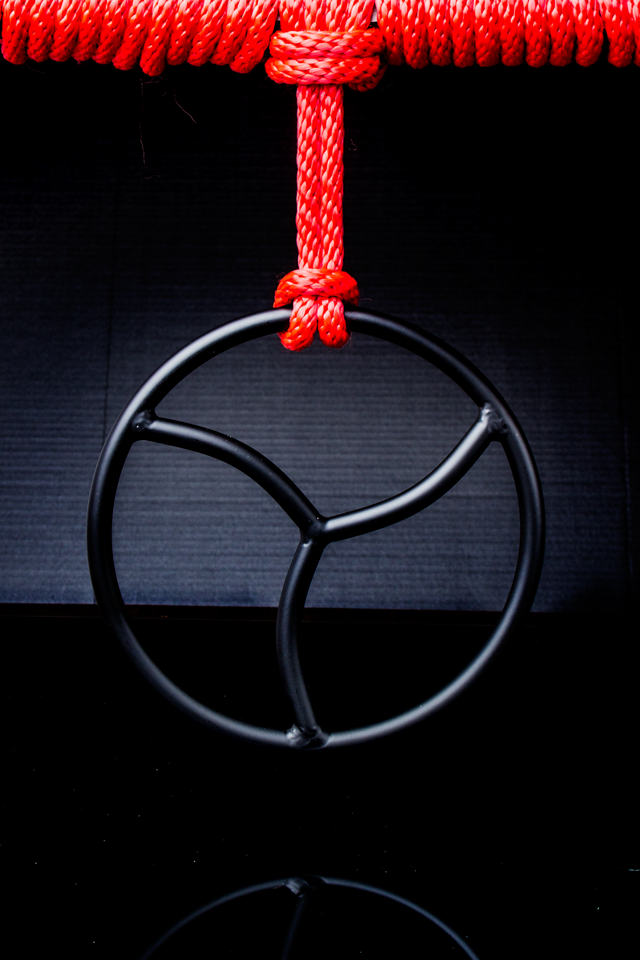
The suspension ring is a single piece of powder-coated steel, smooth but not slippery, with no seams or weld marks that compromise integrity. The 9" diameter is ideal—not so large that it overwhelms, but large enough to attach multiple straps, cuffs, or carabiners without crowding.
The load rating is high enough for partial and full-body suspension when used with proper rigs and training.
Important Note:
This ring is safe only if you know what you’re doing, and only when used with:
a rated anchor point
climbing-grade hardware
proper rope/cuff techniques
emergency quick-release options
communication protocols
constant monitoring
If you are new to suspension or partial suspension, understand this:
This tool is unforgiving to sloppy technique.
The ring will not hide your mistakes. It will highlight them.
For us, the safety protocols were what made the ring empowering rather than frightening.
She trusted the equipment because I trusted the equipment—and because I demonstrated that I knew how to use it.
When your partner’s wrists or arms are lifted overhead, even if only partially, you are responsible for everything that happens. This ring forces you to rise to that responsibility.
IV. SETUP & RIGGING
The ring gave me full creative control.
Carabiners clipped smoothly.
Straps, cuffs, rope, and even thigh supports attached cleanly without bunching.
Some tools limit you.
This one invites planning.
Here are the three positions we used most:
1. Overhead Wrist Restraint (Partial Suspension)
Her wrists were lifted above her head, not enough to bear full weight, but enough to shift her posture and open her chest. It exposed the vulnerability of her underarms, ribs, sides—areas where light touch creates explosive reactions.
People communicate with breath long before words.
Her breathing changed the moment her wrists clicked into place.
2. Forward Lean with Anchored Arms
She leaned forward, wrists anchored overhead, back arched naturally.
A position that demands trust—because it removes the ability to hide any reaction.
This is where the ring shines:
It creates honesty.
3. Kneeling with Overhead Support
A classic submission posture, amplified by the overhead anchor.
Her spine lengthened.
Shoulders rolled back.
Head lowered automatically.
Not because I told her to, but because the position invited it.
Tools that shift posture will always shift the psyche.
V. SUB PERSPECTIVE IN USE
Her words, paraphrased where needed for privacy and safety compliance.
She told me that the ring made her feel:
exposed but safe
nervous but excited
constrained but supported
off-balance in the best way
closer to me than usual
The important part here is that she never felt pain or strain that was unintended.
Overhead positions can be risky for shoulders; she mentioned explicitly that the straps and adjustments I used made her feel secure.
She said:
“The moment my arms lifted, it felt like I could breathe differently.
Not deeper—just… softer.
Like I didn’t have to hold anything in anymore.”
That is the psychological core of submission:
The permission to release tension you didn’t know you were carrying.
She also said she loved the way I circled her once she was bound.
(Not touching, just inspecting tension, angle, posture—standard safety checks.)
For her, that felt like being seen.
Not looked at.
Seen.
There’s a difference.
VI. COMMUNICATION & CONSENT RITUALS
This is where the ring demands excellence.
We use a simple protocol:
1. Pre-scene check
Shoulder mobility
Joint comfort
Emotional state
Boundaries for the session
Safe words and nonverbal safe signals
2. During-scene communication
She gives me breath patterns or small vocal cues when something feels off.
I check circulation, color, tension in the straps, and shoulder stability.
3. Post-scene decompression
We lower slowly—never fast.
Her arms return to her sides.
We shake out the shoulders, rotate the joints, rehydrate, and debrief.
Nothing kills a good scene faster than bad safety.
And nothing elevates a scene like perfect safety.
VII. EMOTIONAL & PSYCHOLOGICAL IMPACT
This is where the Suspension Ring stops being equipment and becomes a dynamic between two people.
For me, the ring provides clarity as a dominant.
Its presence commands precision.
Once she’s attached, every motion matters—mine and hers.
For her, the ring creates a state of attentive vulnerability, a phrase she used to describe that feeling of being restrained but calm—anticipatory but not anxious.
She said the ring made her feel:
“held”
“claimed in the air”
“available to the moment”
“focused on every instruction”
“lost in the atmosphere you created”
That last one is the reason this tool is so powerful.
Atmosphere is half the scene.
This ring reshapes the atmosphere instantly.
Here’s something unexpected:
The ring made her quieter.
Normally, she talks—a lot. Soft comments, reactions, playful challenges.
But suspended, even partly?
She went silent.
Not out of fear.
Not discomfort.
But because the restraint itself took her breath into a different rhythm.
She told me afterward:
“It’s like the ring creates its own language.”
I couldn’t have said it better.
IX. MAINTENANCE & CARE
Simple:
Wipe down after each session
Inspect for scratches or coating chips
Check hardware for deformation
Ensure anchor points remain solid
Store in a cool, dry place
This ring will last decades if maintained properly.
X. OVERALL EXPERIENCE
The ring gave me total command of the scene. Not because it forced her into anything, but because it framed her. A portrait of surrender suspended in the air.
It amplified every instruction.
Heightened every reaction.
Sharpened every moment.
It felt ceremonial.
Not casual.
Not improvisational.
Intentional.
For the Submissive:
She described the experience as:
“A surrender that feels more like floating than falling.”
She felt supported, not trapped.
Opened, not exposed.
Held, not taken.
That distinction matters.
She said the ring made her feel like she was stepping into a ritual rather than a simple restraint.
That is the hallmark of an exceptional tool—
when it shapes the emotions of the scene as much as the physical posture.